
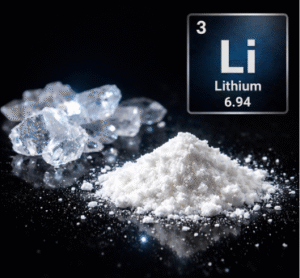
Alzheimer’s disease has long resisted simple solutions. Despite billions spent on drug development, most treatments target just one pathway — and deliver limited results. That’s why a growing number of researchers are now asking a different question:
What if supporting the brain’s natural resilience works better than attacking a single target?
This shift in thinking is exactly why lithium — particularly lithium orotate — is drawing renewed scientific attention.
A Mineral the Brain May Actually Need
Lithium is not new. It’s a naturally occurring trace mineral found in soil, water, and small amounts of food. What is new is the realization that lithium levels appear to be lower in the brains of people with Alzheimer’s disease, and that this deficiency may matter more than previously thought.
Large population studies have repeatedly observed something striking:
Regions with higher natural lithium levels in drinking water tend to have lower rates of dementia.
This doesn’t prove cause and effect — but it does raise an important question:
Could lithium be quietly supporting brain health throughout life?
Why Lithium’s Biology Makes Sense for Alzheimer’s
Alzheimer’s is not caused by one problem. It involves protein build-up, inflammation, energy failure, loss of brain connections, and cell death — all happening at once. What makes lithium so compelling is that it influences all of these processes simultaneously.
Lithium Helps the Brain on Multiple Fronts
Research shows lithium can:
- Reduce the formation of toxic proteins linked to memory loss
- Stabilize brain cell structure, allowing neurons to communicate properly
- Calm chronic inflammation, which accelerates brain damage
- Protect energy production inside brain cells, helping them survive longer
- Support learning and memory pathways, keeping brain connections stronger
- Activate the brain’s natural “cleanup” systems, removing cellular waste
Few compounds affect so many Alzheimer’s-related pathways at once — especially at very low doses.
Why Lithium Orotate Stands Out
Lithium orotate is a specific form of lithium that has gained attention because it may:
- Deliver lithium to brain tissue more efficiently
- Be more effective at crossing the blood–brain barrier than conventional lithium carbonate
- Work at tiny doses, far below prescription levels
- Avoid many of the side effects associated with high-dose lithium drugs
In animal studies, low-dose lithium orotate didn’t just slow decline — it reversed memory problems and restored brain function to more youthful levels. That distinction matters. Most Alzheimer’s research focuses on slowing progression. Lithium orotate is being studied because it appears to restore balance to damaged brain systems, at least in preclinical models.
Why This Matters More Than Another “Breakthrough Drug”
Many Alzheimer’s drugs fail because they focus on one late-stage problem, after damage is already extensive. Lithium works differently:
- It supports early, foundational brain processes
- It strengthens the brain’s ability to cope with stress and aging
- It aligns with prevention-focused, long-term brain health strategies
This may explain why lithium keeps reappearing in studies of longevity, cognitive resilience, and reduced dementia risk.
Why Very Low Doses May Matter
One striking finding in recent research is that benefits occur at lithium levels far below psychiatric doses.
At these micro- or trace levels:
- Neuroprotective signaling pathways are activated
- Toxic effects associated with high-dose lithium are avoided
- Long-term exposure may subtly reshape brain resilience
This aligns with epidemiological data showing lower dementia rates in regions with higher natural lithium levels in drinking water.
The Bigger Picture
Alzheimer’s research is slowly moving away from “magic bullet” thinking and toward supporting the brain as a living, adaptive system. Lithium fits that vision perfectly:
- It doesn’t override the brain.
- It doesn’t force artificial changes.
- It appears to restore balance where degeneration has taken hold.
If future human trials confirm what animal and population studies suggest, lithium orotate may eventually become part of a smarter, earlier, and more effective approach to protecting the aging brain.
Bottom Line
Lithium orotate is not a cure — yet. It has not yet been proven to reverse Alzheimer’s in humans. Large, controlled human trials are still needed.
However it is one of the most scientifically credible, biologically plausible candidates currently under investigation for Alzheimer’s and cognitive decline. And in a field where progress has been painfully slow, that makes it something worth paying attention to.
With Alzheimer’s affecting more than 55 million people worldwide, this discovery could signal a turning point in dementia treatment.